
by Ana Carolina Lopes
Picture this: you’re a major rock star in the 1970’s. In Los Angeles, of course. Maybe New York. Social media didn’t exist yet, but you still can’t go anywhere without people chasing you. You need to record your next album. Label has been pressuring you. It needs to be top notch. You have to outdo yourself and your former album. You have it all in your head: lyrics, melodies, harmonies. You need to get to work and you also need somewhere lowkey. Is that even possible? If it is, then where to go?
Over 15 hours and a thousand kilometers and miles away from the City of Angels, in the Colorado mountains, outside of Nederland, there’s this ranch (yes, a large farm), purchased in 1971 by Grammy Award winning guitarist, bass player, producer, arranger and composer, James William Guercio, from Chicago, Illinois. And his idea matched the artists’ wishes: work in peace and quiet. Out with the strict studio rules and regulations. You find out about it, and so, you make plans to check it out.
You get there and if you were lucky, you might be greeted by the one who worked with Dick Clark, Frank Zappa, Blood, Sweat and Tears, Jerry Lewis, The Buckinghams, and two acts that feel like home, Illinois Speed Press and Chicago.
It’s an idyllic setting. It is relaxed, casual, away from chaos, peaceful, brown, very brown, with animal heads, leathery, woody. That place is the iconic and historic Caribou Ranch. A barn turned recording studio, where the celebrity status don’t follow. Most of the time.
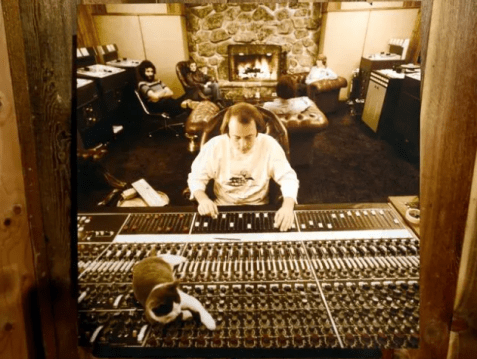
It was equipped with cutting edge technology for the time, a 48-track mixing board, digital displays, all recorded on tape. Pure quality. Unique sound. From the early 70’s to mid-80’s, Caribou was one of the studios that dictated the sound of that period of time. You could say it was one of the best property investments ever made in music. Maybe a ranch turned into motion picture studio and a barn turned into a music recording studio was a little unthinkable back then, but it’s exactly what those who form the industry needed.
Who would’ve thought that a place that resonated harmony, distance and serenity would have as their first client the hotel-trashing, wall-wrecking, pandemonium-lover Joe Walsh and his post James Gang venture, Barnstorm. It was definitely not a life in the fast lane type environment at Caribou (not really), but it would take Joe another four to five years to co-write that. In the spring of 1972, Walsh, Joe Vitale and Kenny Passarelli put together a folk, country rock, blues, mysterious type project, originally intended to be recorded at the soon-to-be-Eagle’s home, to be released in October that same year. Though songs like “Pretty Maids All In a Row” exist, he considers “Rocky Mountain Way” (from his second album recorded at the ranch) his best solo song, as he said in an interview with Howard Stern in 2012. All the dilemmas and doubts he had about leaving the outlaw Jesse James inspired group, wether it was the right decision, were wiped out and solved by the view the snowy mountains in the summer time.

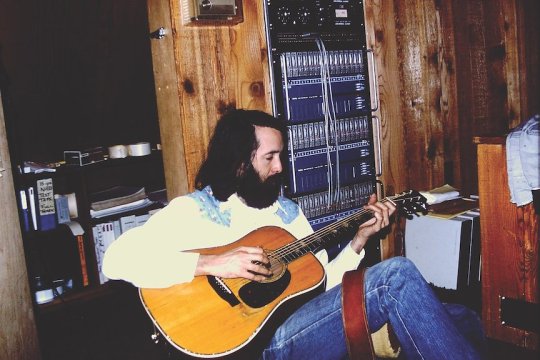
Two years later, in 1974, an international Elton John graced the Colorado scene, naming his 8th studio album after the rocky mountains location. It would not be his last record to be made there. And with that little push, Caribou became an in-demand recording destination.
The list is as follows: America, Billy Joel, Jeff Beck, Peter Frampton, Nitty Gritty Dirty Band, Steely Dan, Rod Stewart, Emerson, Lake & Palmer, Waylon Jennings, Tom Petty, Stevie Nicks, Earth, Wind & Fire, Dan Fogelberg, Souther Hillman Furay Band, Badfinger, Deep Purple, The Beach Boys, John Denver, Carole King, John Lennon and Michael Jackson.
If you’d like things to be more specific: The Smoker You Drink, The Player You Get (Joe Walsh), Open Your Eyes (Earth, Wind & Fire), One Size Fits All (Frank Zappa & The Mothers of Invention), The Innocent Age (Dan Fogelberg), Hideaway (America), Wired (Jeff Beck), Trouble In Paradise (Souther Hillman Furay Band), I’ve Always Been Crazy (Waylon Jennings), Under a Blood Red Sky (U2), Even In The Quietest Moments (Supertramp), Countdown to Ecstasy (Steely Dan), Here Comes the Night (The Beach Boys), Down the Road (Manassas), Simple Things (Carole King), Turnstiles (Billy Joel), Chicago VI, VII, VIII, X, XI (Chicago).
Just to name a few. Is that good enough for you?
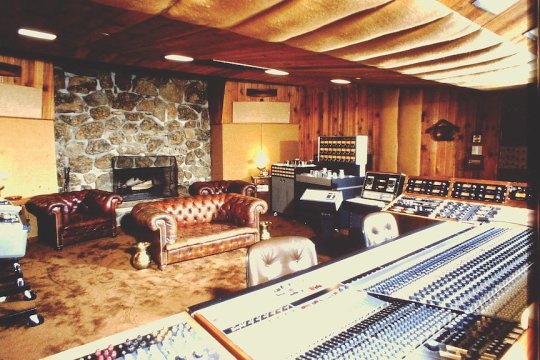
Unfortunately, a fire partially burned down the ranch, most of the damage being in the studio control room, in 1985, and Caribou Ranch closed its doors for music recording forever, putting an end to an era. Almost 30 years later, the property was fully sold by the Guercio family and the memorabilia was auctioned to benefit the Colorado Music Hall of Fame, an institution that always puts in a good word for Caribou and inducted them in August of 2017.
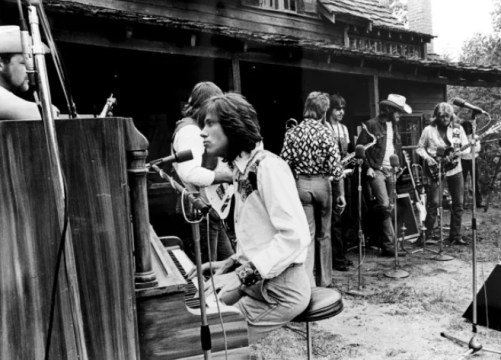
Even after all these things took place, their diverse songbook still lives on. In over 10 years of operations, they found a way to make their mark. And the music, the records and the memories made there stay put in our lives. Just like the mountains. So, in the end, I guess Joe Walsh was right: the rocky mountain way IS better than the way we had, indeed.
 It's All (Really) Happening
Deixe um comentário